> For the complete documentation index, see [llms.txt](https://icij.gitbook.io/datashare/llms.txt). Markdown versions of documentation pages are available by appending `.md` to page URLs; this page is available as [Markdown](https://icij.gitbook.io/datashare/local-mode/install-datashare-on-windows/open-datashare-on-windows.md).
# Start Datashare
Find the application on your computer and run it locally in your browser.
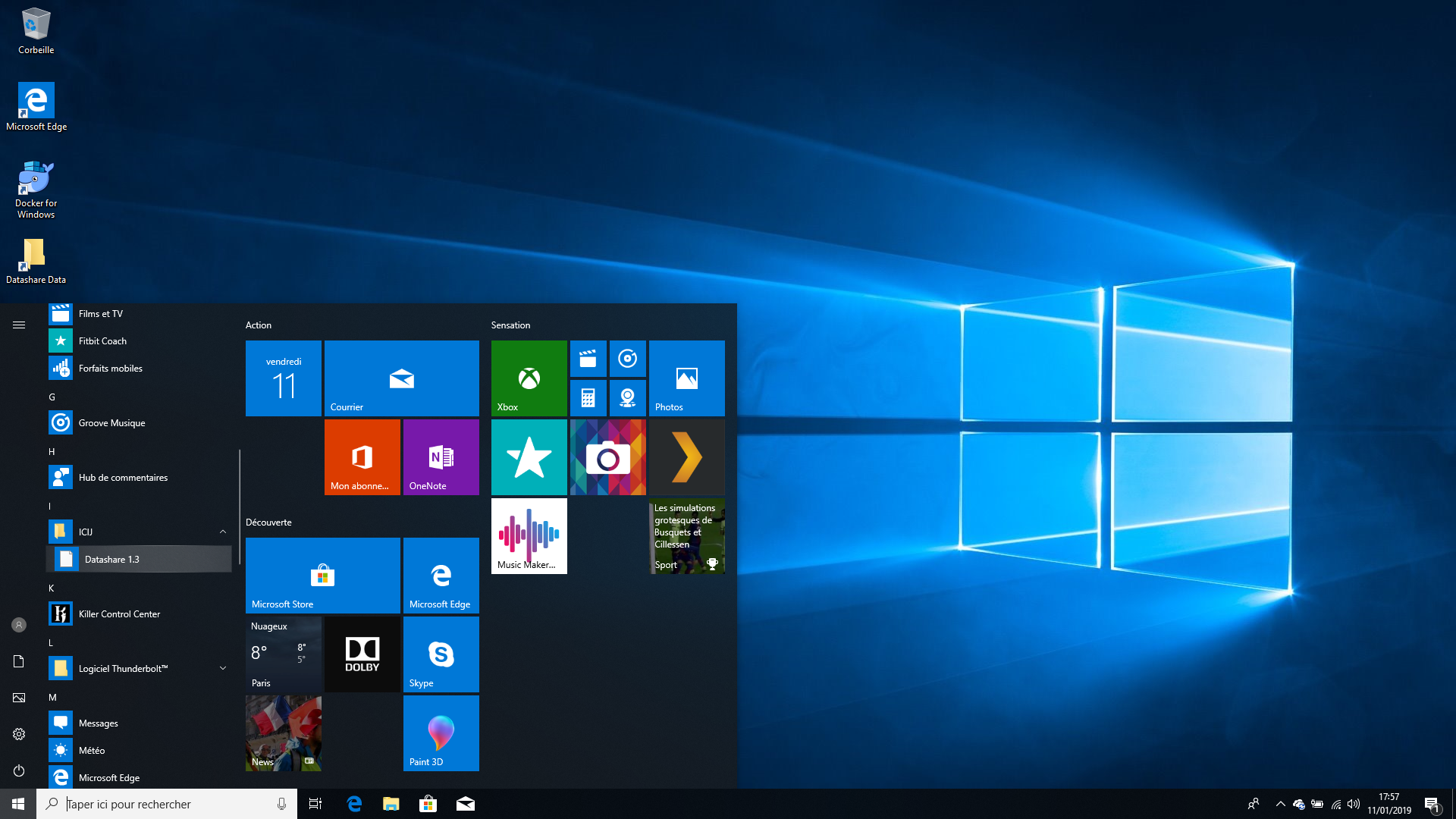
Open the Windows main menu at the left of the bar at the bottom of your computer screen and click on '**Datashare'**. (The numbers after 'Datashare' just indicate which version of Datashare you installed.)
A window called 'Terminal' will have opened, showing the progress of opening Datashare. **Do not close this black window as long as you use Datashare**.
**Keep this Terminal window open as long as you use Datashare.**
**Datashare should now automatically open in your default internet browser.**\
If it doesn’t, type '[localhost:8080](http://localhost:8080)' in your browser.
Datashare **must be accessed from your internet browser** (Firefox, Chome, etc), even though it works offline without Internet connection (see FAQ: [Can I use Datashare with no internet connection?](/datashare/usage/faq/general/can-i-use-datashare-with-no-internet-connection.md)).
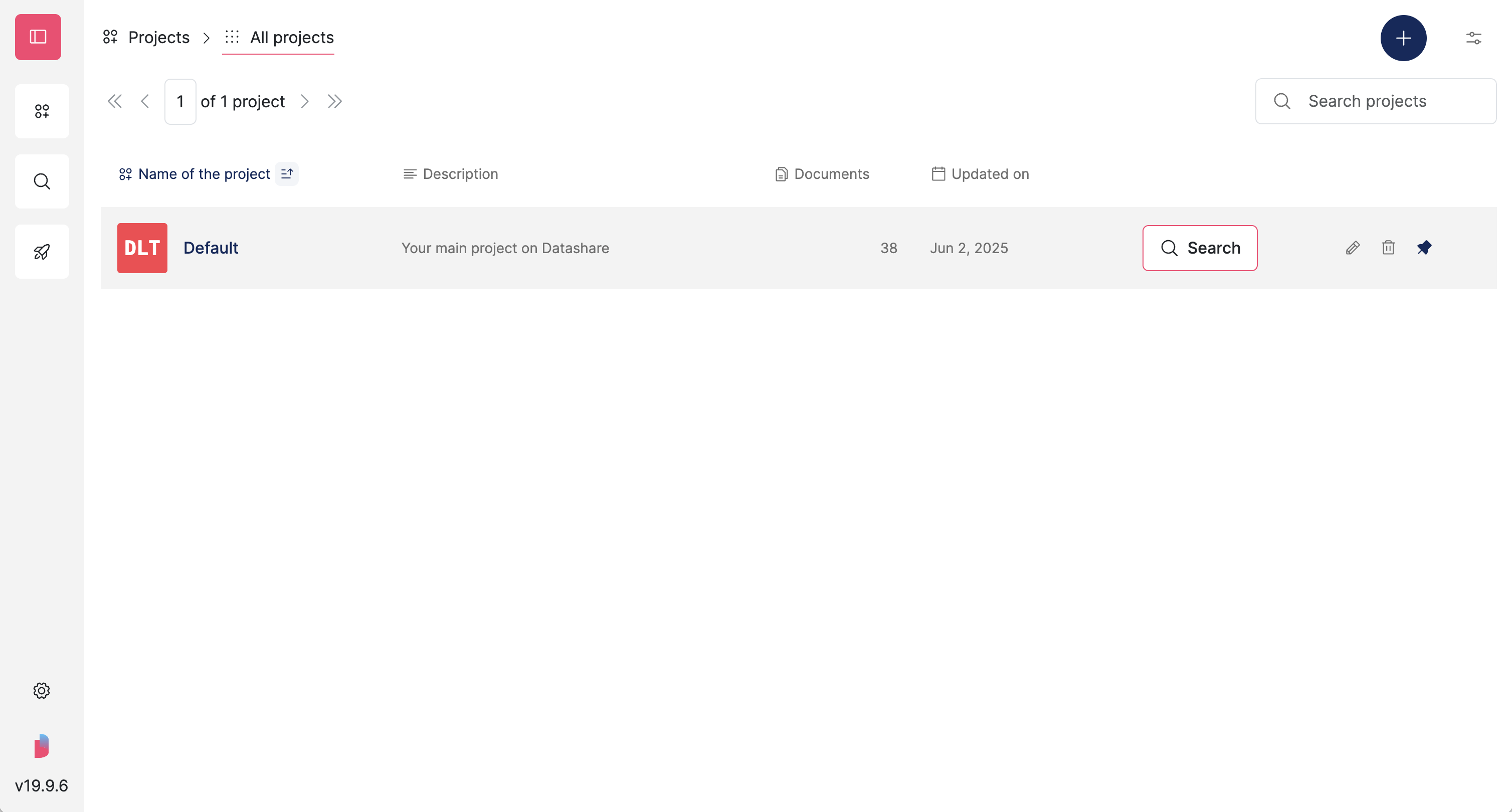
Datashare's homepage
{% hint style="info" %}
**Advanced: adjusting memory settings**
If Datashare crashes on startup or during use, it may be due to insufficient memory allocated to Datashare or Elasticsearch. You can edit the `datashare.bat` script in the installation folder and set the `DS_JAVA_OPTS` and `ES_JAVA_OPTS` variables directly in it. See [Performance considerations](/datashare/server-mode/performance-considerations.md) for recommendations.
{% endhint %}
You can now [add documents to Datashare](/datashare/local-mode/install-datashare-on-windows/add-documents-to-datashare-on-windows.md).
---
# Agent Instructions
This documentation is published with GitBook. GitBook is the documentation platform designed so that both humans and AI agents can read, navigate, and reason over technical content effectively. Learn more at gitbook.com.
## Querying This Documentation
If you need additional information that is not directly available in this page, you can query the documentation dynamically by asking a question.
Perform an HTTP GET request on the current page URL with the `ask` query parameter, and the optional `goal` query parameter:
```
GET https://icij.gitbook.io/datashare/local-mode/install-datashare-on-windows/open-datashare-on-windows.md?ask=&goal=
```
`ask` is the immediate question: it should be specific, self-contained, and written in natural language.
`goal` is optional and describes the broader end goal you are ultimately trying to accomplish on behalf of the user. GitBook uses it to tailor the answer towards what is most useful for that goal.
The response will contain a direct answer to the question and relevant excerpts and sources from the documentation.
Use this mechanism when the answer is not explicitly present in the current page, you need clarification or additional context, or you want to retrieve related documentation sections.